

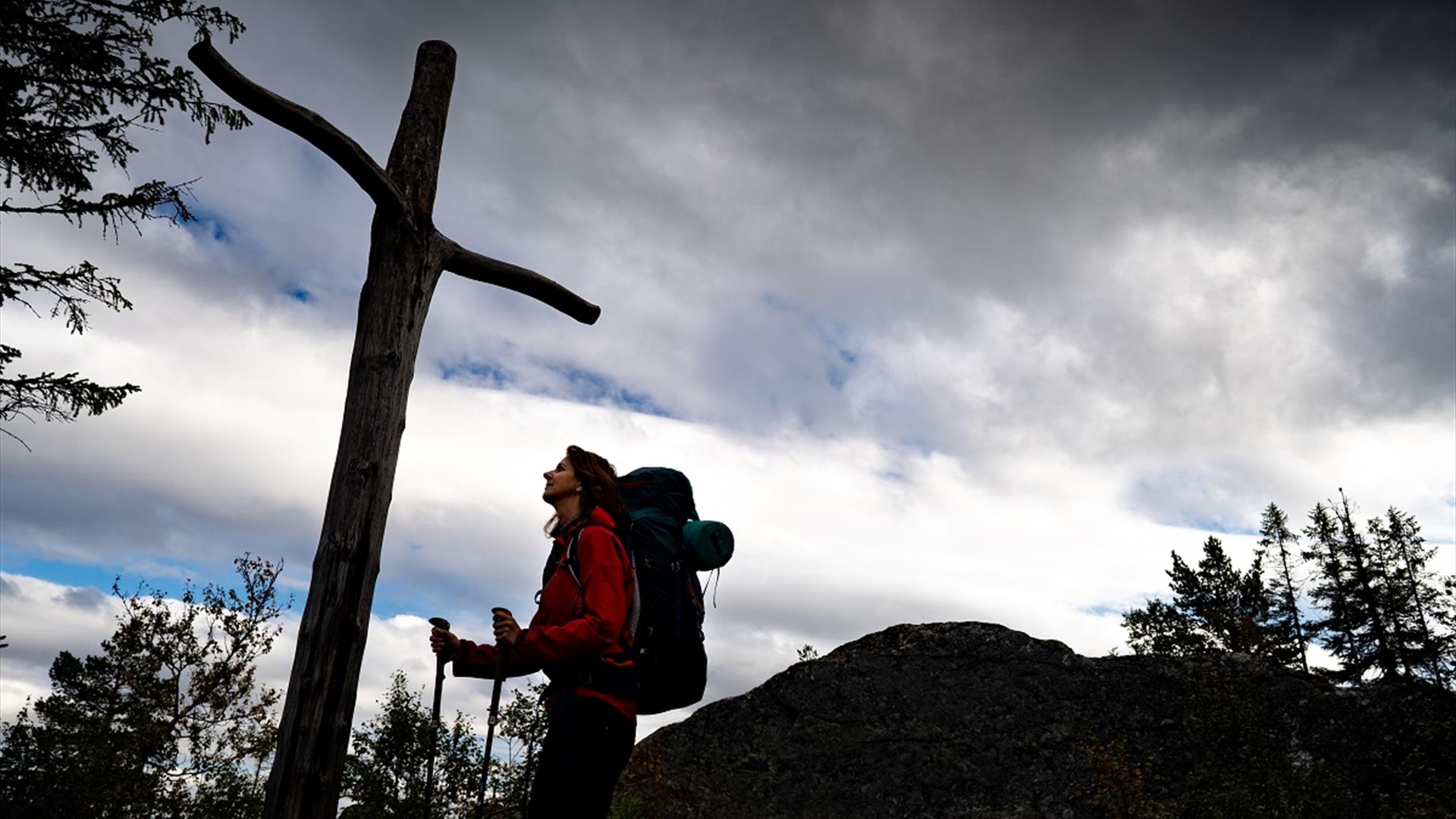
The Østerdalen Pilgrim Path
Swap the busy everyday life for a journey through history.
In a world filled with constant noise, screens, and distractions, more and more people are seeking nature to disconnect and recharge. What if your next summer adventure was more than just a hike? What if you went on a pilgrimage?
The Østerdalen Pilgrim Path takes you through diverse landscapes–along rivers, across mountains, and through quiet valleys. Pilgrims have walked routes like this to Nidaros for centuries. When you set out on this journey, you're quite literally following in the footsteps of traveelers from 1,000 years ago.
About the Østerdalen Pilgrim Path
- Approx. 327 km (depending on the starting point)
- Around 21 days
- Recommended for experienced hikers
- Best season: June 1st - September 12th
Historically, Østerdalen was an important route for pilgrims traveling between the burial site of Saint Olav in Trondheim and the some of Saint Bridget of Sweden in Vadstena.
As you walk, you'll encounter cultural landmarks, museums and churches that highlight the region's rich history. You'll pass the Pilgrim Stone at Åkre, dating back to around 1040, and if you start from Trysil, you'll also visit Munkbetsetra–a medieval resting from pilgrims.

At the beginning, you'll probably notice the blisters. But after a few steps–and maybe a plaster or two–you'll start to feel something else: stillness, calm, and a deep connection to nature in the vast forests and mountains.
Pilgriamge and Faith
Historically, faith was the main motivation for pilgrims heading to Nidaros (modern-day Trondheim). Many traveled to pray at holy sites, visit saint's graves, seek forgiveness, or feel closer to God.
Today, people walk for many different reasons–cultural interest, spirituality, personal reflection, or simply to meet others along the way.
Along the route from Rena, the connection between pilgrimage and faith becomes especially clear. For over 40 years, the ecumencial retreat Lia Gård has been an important stop for pilgrims. Here, the journey becomes more than a physical trek–it becomes a spiritual experience.
Lia Gård offers what many pilgrims are searching for: nature, silence, faith, and community. If you're walking from Rena to Tynset, this is a perfect place to pause and recharge.
Two starting points for the Østerdalen Route
You can begin your pilgrimage from either:
- Rena (185 km)
- Trysil (216 km)
Both routes offer close contact with nature, but the Trysil route is slightly more demanding. The two paths meet near Åkre, by the two-meter-tall Pilgrim Stone. From Tynset, it's about 189 km to the iconic Nidaros Cathedral in Trondheim.
Trysil: Start at the Border – 420 km to Trondheim
If you begin in Lutnes, in Trysil municipality, you'll start right at the border between Norway and Sweden. From here, it´s a full 420 km to Trondheim.
This route is more challenging and ideal for experienced hikers seeking a true wilderness adventure. Expect mountains, birch forests, pine forests, and wetlands–classic Eastern Norwegian nature at its best.
Rena: A Scenic Start Through Varied Nature – 375 km to Trondheim
Starting from Rena offers a slightly less demanding route, though still best suited for those with hiking experience.
Here, you'll walk through quiet forests, soft reindeer moss, lingonberry heaths, river landscapes, and gentle mountian terrain. Along the way, you'll encounter historical highlights like Moraveien, The Pilgrim Stone at Åkre, and St. John's Church near Lia Gård.
Both routes cross Fonnåsfjellet–a steep and challenging section, but the views from the top make it absolutely worth the effort.
If you prefer shorter sections, you can start your journey near several train stations. The Røros Railway runs close to large parts of the route, making the trail accessible and flexible. For more details, visit the official Pilgrim Path website.
What to Know Before You Go
The Østerdalen Pilgrim Path is considered demanding. However, if you're used to long hikes, navigation, varied terrain, simple accommodation, and carrying your own gear, it's absolutely achievable.
Mobile coverage can be limited in some areas, so always bring a physical map. Preparation is key–plan well, and the journey will be far more enjoyable.
You'll be walking long distances, and your backpack will likely feel heavier after a few miles that it did at home. Pack light–lighter than you think.
We wish you a meaningful and unforgettable pilgrimage.




© Visit Røros and Østerdalen 2026. All Rights Reserved


